
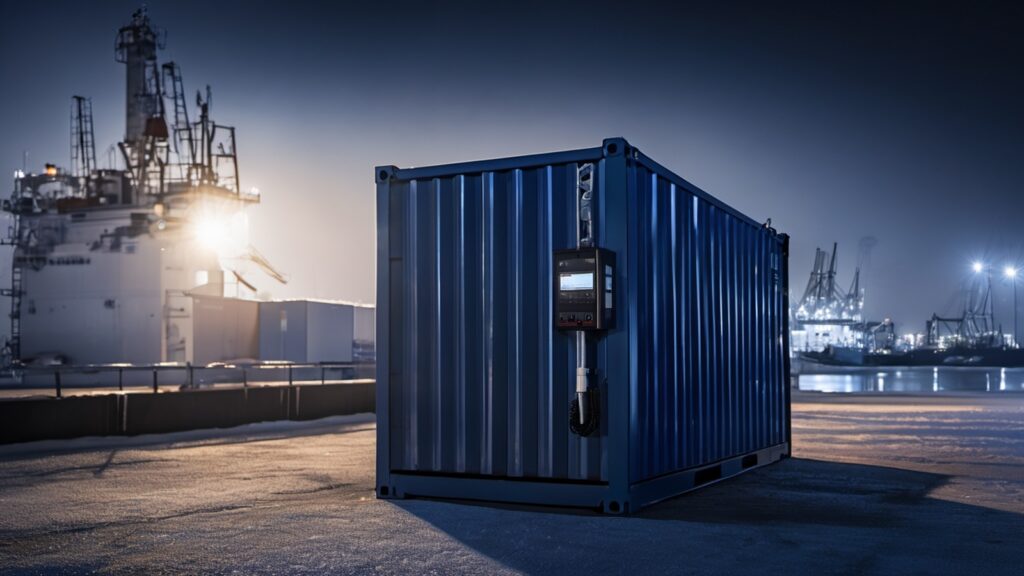
A container of frozen milkfish arrives at the Port of Los Angeles. FDA schedules its sampling three days out, and the container waits on the dock. Who is plugging in the reefer, who is watching the temperature, and if it drifts during those three days, whose fault is it? We ask this at every first meeting with a Taiwanese seafood plant exporting to the US, and eight out of ten cannot answer. The cold chain rarely fails in your freezer in Taiwan; it fails on the stretch after the cargo leaves your hands and before it reaches the US buyer’s warehouse — the stretch nobody owns.
How the US regulates the cold chain: not just the temperature, but who is responsible
Under the Food Safety Modernization Act (FSMA), FDA has a rule dedicated to transport: the Sanitary Transportation of Human and Animal Food rule (21 CFR Part 1 Subpart O). Its logic is not to prescribe a number of degrees; it is to require that for every leg of the journey someone specifies the temperature, delivers it and records it. Four roles:
- Shipper: decides what temperature the cargo needs and how it will be transported, and gives those requirements to the carrier in writing
- Loader: confirms before loading that the container is clean and pre-cooled
- Carrier: maintains the temperature the shipper specified, and provides temperature records when the shipper asks
- Receiver: checks the temperature on receipt and acts on any deviation
The rule requires the related records to be kept for 12 months, available to FDA within 24 hours of a request. As an exporter you are outside the US, so the rule directly binds the US-side carrier and receiver — but the “shipper’s written temperature requirement” is normally your shipping document. Without it, the whole chain has no reference point from the very first leg.
What records to keep, and for how long
In practice the US importer and FDA ask for three layers of temperature records:
| Stage | Records | Who provides them |
|---|---|---|
| Taiwan, before shipment | Cold-store temperature logs, product core temperature at loading, container set-point | Exporter |
| In transit | Full data-logger curve inside the reefer, the carrier’s or airline’s container temperature report | Carrier / forwarder |
| US arrival | Temperature at opening, container temperature during inspection, temperature on entry to the warehouse | Receiver |
When the FSVP Importer verifies you as a supplier, it treats your Taiwan cold-store and loading records as evidence that you have preventive controls; the Sanitary Transportation rule’s 12-month retention covers the transport leg. Put together, we recommend exporters keep the temperature file for every shipment for at least two years (matching the FSVP record period) — one package per shipment, ready to pull when asked.
A broken chain at the port: three common scenarios and who is responsible
Scenario one: waiting in the inspection queue, container on the dock. The reefer stays on dock power (reefer plug), billed per day and normally paid by the importer. As long as the container log is continuous and never exceeds the set-point, the chain is not broken. What matters most here is that someone is watching the temperature report and can pay the plug-in charges.
Scenario two: FDA takes samples, part of the cargo is removed. After sampling, the remaining goods may be held pending results. Where the cargo sits during that time and who records the temperature must be agreed in advance. SKYCARGO’s practice is to move the cargo into our own cold store for the hold, with the temperature record issued by the warehouse.
Scenario three: the chain really breaks. The container is opened and the temperature is out of range, or the logger shows a gap. Under the Sanitary Transportation rule the receiver must decide whether the food is still safe; it will normally ask the exporter for the product’s temperature-tolerance data, and the US side decides whether to release, partially destroy or re-export. Liability follows where the break happened: insufficient loading in Taiwan is the exporter’s, in transit is the carrier’s, and the waiting period at the dock belongs to whoever arranged the power.
That Tainan milkfish shipment was fine in the end because all three layers of records were complete: a core temperature of −18°C at loading, a full data-logger curve, and three days of dock plug-in records. The cargo was released into the channel the same day FDA’s results came back.
Five things to prepare before shipping
- A written temperature requirement (a specific condition on the shipping documents, such as “maintain at or below −18°C”)
- A temperature logger in every shipment, with the logging interval set and an agreement on who downloads the data on the US side
- Confirmation that the US receiver has a cold store and can handle FDA holds and inspection
- An agreement on who pays dock plug-in and demurrage charges, and up to what limit
- The product’s temperature-tolerance data ready in advance (how far it can warm for how long and still be safe), so there is a basis for discussion if the chain breaks
How SKYCARGO takes over the US leg
SKYCARGO INC holds FDA and USDA agent status and can act as Importer of Record and consignee, dealing directly with FDA / USDA inspection. When the cargo arrives in Los Angeles or Oregon we arrange the cold-store hold, log the container temperature, handle sampling and release, and then deliver by cold chain into the channel. You cover the records up to loading in Taiwan; the receiver’s records and the temperature during inspection on the US side are handled by the same team, so the chain never breaks on the stretch nobody owns.
If you are exporting cold-chain cargo to the US for the first time, tell us the product, temperature conditions and target channel and we will reply within one working day with the documents you need and the US-side arrangements.
This article summarizes FDA 21 CFR Part 1 Subpart O (Sanitary Transportation) and FSVP rules for reference only. Always check the latest FDA announcements.