
A furniture maker in Taichung asked us: “nine pallets — consolidate, or a full container?” Sales instinct said consolidate: the cargo cannot fill a box, so why pay for one? We laid out the door-to-door total, and the answer was the full container. Because a large share of LCL money is not spent at sea — it is spent at the destination port.
Two billing logics: per CBM vs per box
LCL (less than container load) bills by CBM: your cargo shares a container with strangers, freight runs volume times a unit rate, with a minimum charge — and heavy-dense cargo meets weight-or-measure rules. FCL (full container load) bills by the box: one container, one price, thirty-percent full or ninety, sealed from factory to consignee.
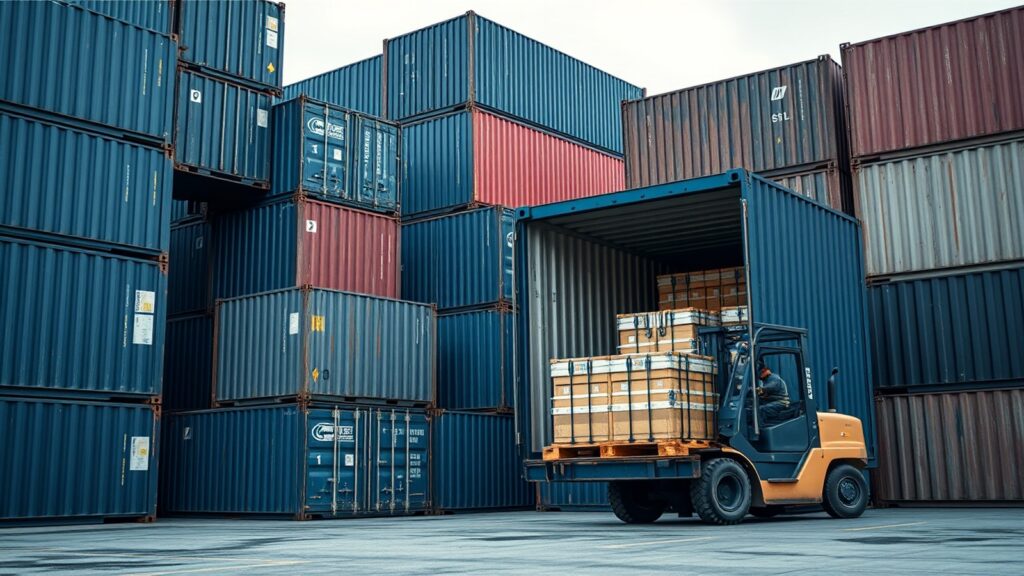
Capacity as industry common knowledge (not a rate): a 20-foot box nominally holds about 33 CBM, with palletized reality usually 28–33; 40-foot and 40HQ scale up — light bulky cargo fills them, dense cargo hits the weight ceiling first.
Computing the break-even: door-to-door totals, not ocean-leg rates
The break-even is not one global number — it is the crossing point you compute for your own lane and cargo:
- Step one: lay LCL cost open — ocean leg (CBM × rate) + origin fixed fees + destination CFS/deconsolidation charges (often billed per CBM again) + inland delivery
- Step two: quote one 20-foot FCL door-to-door on the same lane
- Step three: draw both cost lines; set them equal and solve for CBM — that crossing is your break-even
- Step four: volume near or above it, ask for the container
Most people err by comparing ocean-leg unit rates only. LCL’s destination charges — US-lane deconsolidation above all — frequently exceed the ocean leg itself, and surface only at arrival. Mental math on unit rates overstates the break-even; in practice the container wins earlier than intuition says.
The three hidden costs of LCL
1. Destination deconsolidation. Consolidated boxes go to a CFS warehouse for splitting, billed per CBM, paid at the receiving end — and often missing from the Taiwan-side quote. The only reliable defense: demand a door-to-door all-in quote with destination charges enumerated, then compare.
2. Exam by association. A consolidated box houses a dozen shippers’ cargo; if any one draws CBP’s attention, the whole container goes to the exam station — everyone waits, everyone shares certain costs. Your clean documents cannot shield you from your box-mates. FCL has no such neighbors.
3. Schedule uncertainty. Consolidations sail when the box fills, and arrival adds a CFS-processing leg; a full container discharges and rolls. On orders with hard delivery windows, those days are the difference between acceptance and penalties.
When to ask for FCL directly
- Volume approaching your computed break-even — with association risk and schedule as tiebreakers
- US retail POs with arrival windows and late penalties
- Cargo intolerant of crushing, contamination or mixed stowage (food, precision goods)
- Fixed-cycle replenishment to one consignee — a standing container simplifies sailing schedules and ISF cadence
Where SKYCARGO fits
Ask us for both numbers at once: SKYCARGO INC quotes the same cargo both ways, door-to-door with destination charges enumerated, and computes the crossing point with you — plus the wider ocean-air-express decision when speed is in play. Get a quote. (Personal parcels: Shiptw.)
Rates and charge structures vary by lane and season; figures here are industry conventions, not quotes. Reference only.