
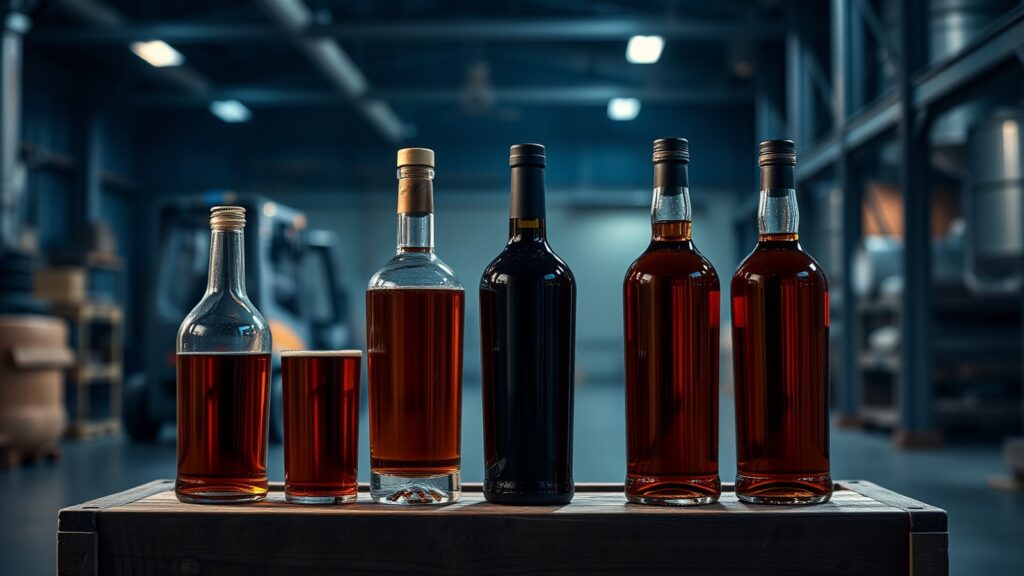
Taiwanese whisky winning international awards is no longer news, and craft breweries ask us about the US market one after another. But alcohol is a different world from food: food exports mostly answer to one agency, FDA; alcohol answers to a federal layer plus fifty state layers, and the federal regulator is not FDA — it is TTB, the Alcohol and Tobacco Tax and Trade Bureau under the Treasury. Practical Chinese-language material on this is scarce; here is the whole structure laid out once.
Federal gate one: the importer needs a TTB permit
For alcohol to enter the US, the importer must hold a TTB Importer’s Basic Permit. That permit is issued to a US-based importer — not to a Taiwanese distillery. Meaning: before you ship, you must already know whose permit brings this consignment in. Without a licensed importer, the goods reach port and stop there. This is the biggest structural difference from ordinary food: for food you can arrange your own importer of record; for alcohol, the importer identity is itself a license someone must hold.
Federal gate two: COLA, label approval in advance
Ordinary food labels are checked after the fact; alcohol reverses it: every label needs a COLA (Certificate of Label Approval) from TTB before import and sale. Different expressions, different sizes, even a redesigned layout can require a new filing. One line of text is non-negotiable: the GOVERNMENT WARNING health statement, with prescribed wording and bold formatting — omit or paraphrase it and the label fails. The classic Taiwanese mistake is printing the full label run first and filing afterward; when TTB requires changes, the whole print run is scrap. File the COLA first, print after approval.
The state layer: three tiers, and mostly no direct-to-consumer
Clearing federal is only the beginning. Most states run alcohol sales on the three-tier system: importers sell to wholesalers, wholesalers to retailers, retailers to consumers — with licenses and rules that differ state by state. Two practical conclusions:
- Selling directly to US consumers is prohibited in most states — a direct-shipping web-store model basically does not work for this category
- Each target state is its own project: what is legal in California may not be in Texas; build the channel state by state
So the correct sequence runs backwards: line up wholesale and retail channels in the target state, then confirm the licensed importer, then file COLA, and only then book the freight. Run it forward instead, and you have finished whisky with no legal road to market.
Where SKYCARGO fits
SKYCARGO INC is a US logistics company with FDA and USDA agent status. On alcohol projects, the TTB permit and COLA belong to the brand and its licensed US importer — our role is the logistics leg of the chain: before booking we walk through three items with you — licensed importer, COLA status, target-state channel — so the goods are not on the water while the license is still pending; after arrival we handle warehousing and delivery to your wholesale partners. The traps in alcohol are rarely in the freight — they are in a mis-ordered chain, and we schedule the logistics inside the compliance timeline rather than being told at the end that the goods must ship now. Personal-use alcohol is a controlled category and does not go through the ordinary Shiptw consolidation channel — ask first.
Taking Taiwanese spirits or craft beer into the US? Tell us the products, target states and current channel status and we will reply within one business day with the chain gaps and a logistics timeline.
This article summarizes the TTB and state alcohol frameworks for reference only. Confirm permits and label requirements against current TTB publications and state authorities, with formal legal advice for individual cases.