Category Cross-border Logistics

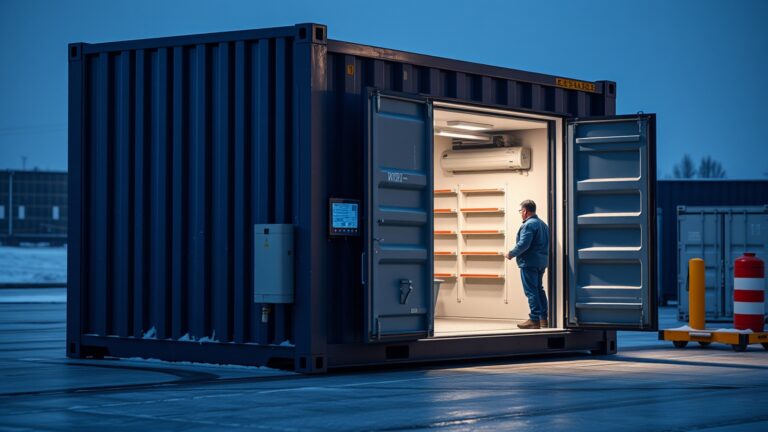
Reefer Container Operations: Pre-Cooling, PTI, Setpoints

The unit ran perfectly and the cargo thawed anyway — because reefers hold temperature rather than create it. Why carriers say never pre-cool the box but always pre-cool the cargo, why the panel setpoint is not your cargo temperature, the three airflow loading rules, and the power-gap map across terminal, vessel, drayage and the CBP exam station.
Triangular Trade Logistics: Taiwan Books the Order, China Ships Direct — How Switch B/L and Document Flow Work

Taiwan takes the order, China ships direct, and the cargo never touches Taiwan — the structure runs on three separated flows, with documents as the lifeline. How a Switch B/L changes the shipper without changing the facts, how dual invoices keep both ends blind, why origin is a fact rather than a document option, and the declaration duties no structure can route around.

Shipping E-Commerce Goods from the US to China: The Compliant Route, Gray-Channel Risks, and the Export-Control Red Line

US goods selling into China stand on three pillars — formal declaration at both ends, real-name consignees, taxes priced in — across three lawful tracks. Why parallel-goods and split-parcel channels face stacked risk with both customs tightening at once, the one-question test for gray quotes, and the export-control line that is criminal, not commercial.

DDP vs DAP vs DDU: Who Pays the Duty, Where Risk Transfers, and the Truth About “All-Inclusive Tax” Deals

Three letters on a quote decide who owns the import: DAP delivers with the buyer clearing and paying; DDP makes the seller the Importer of Record with everything that entails; DDU is the legacy spelling of DAP. Why "who pays" is the surface and "who imports" is the point, the honest anatomy of cheap double-clear tax-included packages, and the one-question test that separates proper DDP from gray.

Air Freight Pricing Explained: Chargeable Weight, the /6000 Volumetric Formula, and the Surcharges Behind the Base Rate

Aircraft sell space as much as payload: freight bills on chargeable weight — actual or volumetric (L×W×H cm ÷ 6000), whichever is greater — and couriers divide by 5000, making the same box heavier. The surcharge layer (fuel, security, peak, handling) that flips rate comparisons, the weight-break quirk where declaring more costs less, and three packaging moves that shrink the bill.

Importing Japanese Seafood into the US: What FDA Requires, How Toyosu Market Direct Shipping Works — SKYCARGO’s Actual Flow

Search in Chinese for how Japanese seafood enters the US and you find years-old nuclear-wastewater news, nothing useful. Following FDA seafood HACCP and import rules, this article covers the documents Japanese seafood needs, the parasite-freezing requirement for sashimi-grade fish, where radiation screening stands today, and the actual flow our group runs from Toyosu Market by air to the US and Taiwan.

US to Hong Kong Business Shipments: FedEx Direct, Local Collection via E.SUN Bank Hong Kong, and the Logistics-Plus-Payment Setup for Taiwan–HK Trade

Every US-to-Hong-Kong guide is written for online shoppers. A business shipment needs three other things: a stable direct lane, Hong Kong’s duty-free clearance, and a way to collect payment in Hong Kong. This article explains SKYCARGO’s US→HK FedEx contract-rate lane, Hong Kong’s role as an entrepôt, and how local collection through E.SUN Bank’s Hong Kong branch closes the money loop.