
US food circles pass around a brutal equation: the cost of a recall is not what you sold — it is what you cannot account for. When FDA asks “where else did this spinach go,” the company that can answer recalls three lot codes; the company that cannot recalls three months of production. Same product, same problem, tenfold difference in damage. FSMA 204 — the Food Traceability Rule — exists precisely for that gap: it does not stop the incident; it requires you to answer within 24 hours when it happens.
The FTL: first check whether your products are on the list
FSMA 204 does not govern all food — it governs the high-risk items on the Food Traceability List: leafy greens, fresh-cut produce, seafood, soft cheeses and other historically recall-prone categories. Taiwanese exporters should look hardest at seafood: many frozen and processed aquatic products fall inside. Step one is mapping your items against FDA’s published FTL. On the list, you build the system; off the list, build it anyway — your downstream customers run their own traceability and will come back up the chain asking you for the data.
KDE × CTE: the skeleton of the record
The rule’s logic is a product of two acronyms:
- CTE (Critical Tracking Events): the nodes in a product’s life — receiving, transformation, shipping — each one a recordable event
- KDE (Key Data Elements): the fields each CTE must capture — traceability lot code, time, location, quantity, parties
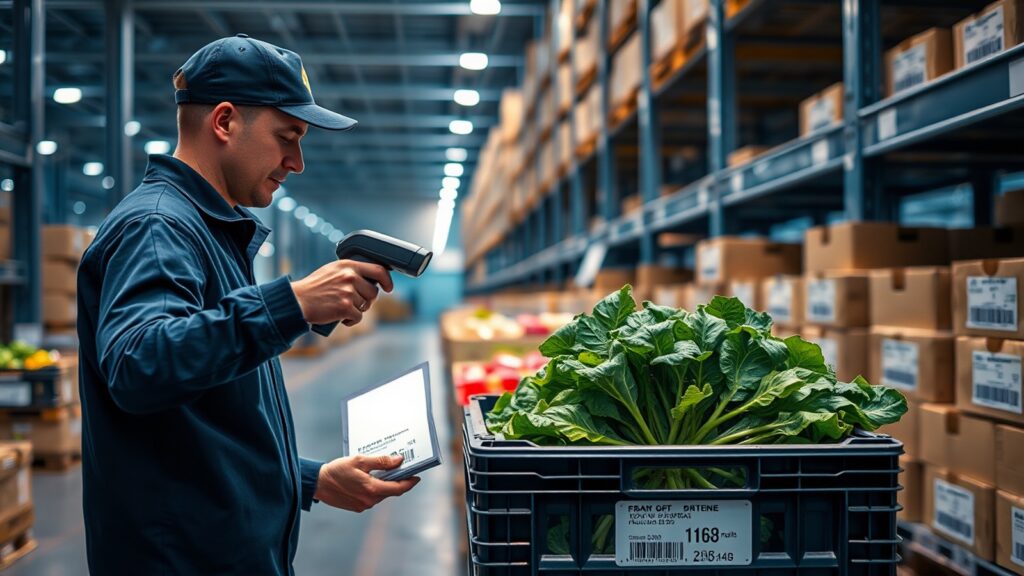
In one sentence: for every critical event, record every key field, with lot codes that chain unbroken from farm or factory to retail. The hardest requirement: when FDA asks, a sortable electronic spreadsheet within 24 hours. Paper records, department-scattered Excels, data that takes three days to assemble — all fail this bar. The 24 hours tests your system, not your overtime. Cold-chain items stack temperature-record responsibility on top — the two record sets should be designed together.
On timing: the compliance date was originally January 20, 2026, and FDA has since signaled enforcement delays — the operative date is whatever FDA’s current publications say. But do not read delay as exemption: channel contracts usually run ahead of the regulation.
Recall classes: I / II / III
FDA grades recalls by risk: Class I (reasonable probability of death or serious harm), Class II (temporary or reversible effects), Class III (unlikely to cause harm — mostly labeling and quality issues). The class sets the intensity, but the cost formula is constant: good traceability = a smaller recall perimeter = smaller losses. The company that can prove “only these three lots” issues a press release; the company that cannot suffers a catastrophe — and it is exactly the capability your product liability insurer and your channel will scrutinize after an incident.
How SKYCARGO takes it from there
SKYCARGO INC holds FDA and USDA agent status and can act as your Importer of Record and consignee. In the traceability chain, the logistics provider is itself a CTE node — our receiving, warehousing and outbound steps carry complete, queryable lot, time and quantity documentation, and cold-chain items hand over temperature logs alongside, so Taiwan-side records plug straight into the US-side spreadsheet. Before shipping we also help map whether your items sit on the FTL and which fields your documents still lack. Personal food shipments belong with Shiptw consolidation.
On the FTL without a KDE×CTE system yet? Send us your product categories and current record format and we will reply within one business day with the traceability gap list.
This article summarizes FSMA 204 for reference only. FTL contents and compliance timing follow FDA’s current publications.