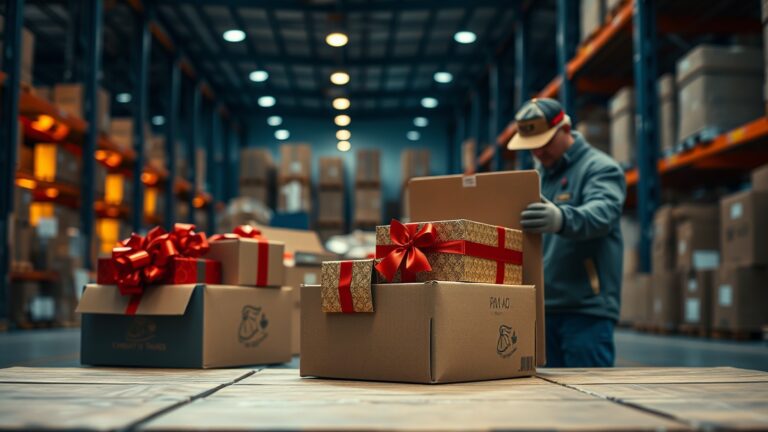

“We already have an FDA agent — why is the port of Los Angeles still asking for importer details?” We get this question several times a month. Mr. Chen, who runs a frozen seafood business in Tainan, paid a consultancy more than NT$10,000 last year to complete his FDA facility registration and assumed he could ship freely. His first container stalled at the broker’s desk with one line: “Please provide the Importer of Record.” He thought the agent was the importer. They are three completely different positions.
Written by SKYCARGO INC, a US logistics company shipping between the US and Taiwan since 2014 and incorporated in the US in 2023, with warehouses in Oregon, Los Angeles and Taoyuan; it serves as an FDA U.S. Agent and can assist clients with USDA registrations and inquiries. More on this topic: US Food & FDA Compliance: The Complete Guide Index.
Three roles, three different sets of rules
The short version: these roles come from three different regulations and answer to different parties.
The FDA U.S. Agent comes from FDA facility registration rules. If your plant is outside the United States and your products are sold there, you must name an individual or company located in the US as your agent when you register. The job is simple: when FDA needs to reach your plant — to schedule an inspection or request documents — it contacts the agent. The agent is not responsible for your cargo, only for being reachable.
The Importer of Record (IOR) comes from U.S. Customs and Border Protection (CBP). Every shipment entering the US needs a party with legal standing in the country who answers to customs: declares the goods and their value, pays duties, and carries the legal consequences of a false declaration. That is the field your broker fills in. Without an IOR, the cargo does not enter the customs system at all.
The FSVP Importer (Foreign Supplier Verification Program) comes from the FDA Food Safety Modernization Act (FSMA). The US requires “the American who brings the food in” to verify the foreign supplier’s food-safety performance: whether your HACCP plan exists, whether the hazard analysis makes sense, whether there is a history of detentions. The FSVP Importer declared at entry must have a DUNS number, and FDA audits that company directly.
In one sentence: the agent handles contact, the IOR handles customs, the FSVP Importer handles food-safety verification.
Can they be the same company?
Yes — and in practice that is the simplest arrangement. FDA does not require the three roles to be separate; it requires each seat to be filled. The problem is that most “FDA registration services” on the market only provide the first role, because it takes nothing more than a US address and a phone number and sells for a few hundred dollars.
The IOR and the FSVP Importer are different: those seats carry real liability. The IOR pays the duties; the FSVP Importer is the one FDA audits. And not just anyone can lend its name: under CBP rules, a logistics company or freight forwarder that only earns freight and has no financial interest in the goods cannot act as IOR in its own name (CBP Directive 3530-002A). In practice these seats are held by your US buyer (a distributor or retail channel), or by you as a non-resident importer, with a separately appointed US FSVP agent.
Think of renting a car abroad: the agent is the friend who leaves a local phone number, the IOR is the person who signs the rental contract, and the FSVP Importer is the guarantor who vouches that “this driver will be careful.” All three can be the same person — but that person has to actually be there and actually be willing to take responsibility.
The three traps Taiwanese exporters fall into
Trap one: assuming registration means you can ship. Facility registration is just the ticket in. Before every shipment you still file a Prior Notice with FDA — at least 4 hours before arrival by air, 8 hours by sea. On arrival, customs wants an IOR and FDA wants an FSVP Importer. That is exactly where Mr. Chen’s container got stuck.
Trap two: asking the US buyer to be the IOR, and the buyer declining. Many channels are happy to buy but unwilling to be the importer, because it means duties, legal exposure and handling FSVP audits for your product. Negotiations often stall right here, and the order disappears. There is another route: act as a non-resident importer yourself (Form 5106, a resident agent, a bond), plus an FSVP agent for food — see the steps in our IOR guide.
Trap three: hiring a registration-only service that is absent when something happens. FDA sampling, USDA/APHIS requests for documents, a label judged non-compliant — all of this happens after the cargo lands and needs someone in the US to deal with it on the spot. An agent collecting an annual fee will not go to the port for you.
How SKYCARGO does it: agent and logistics by us, importer only under conditions
SKYCARGO INC is a US logistics company, incorporated in 2023 on US–Taiwan shipping operations running since 2014, and serves as an FDA U.S. Agent: we can act as your plant’s U.S. Agent, assist with USDA registrations and inquiries, and deal with FDA and USDA/APHIS inspections. For most shipments we quote DAP: Taiwan-side handling, ocean freight and FDA Prior Notice, entry through our partner licensed customs broker, inspections at our Oregon or Los Angeles warehouse, and cold-chain delivery into the channel. You act as the importer yourself as a non-resident importer, and we list the documents you need.
We take the Importer of Record and FSVP Importer seats in one situation only: when we are your selling agent in the US — under a long-term agency agreement, actually finding buyers and taking orders for you, paid a commission on sales, and running the FSVP ourselves. We take these cases only when all of those conditions are met; we do not act as a nominal consignee or only collect and forward payments.
Taijiang milkfish went through the whole process this way: SGS testing and HACCP/ISO 22000 documents were completed in Taiwan; we checked the FDA registration, reviewed the labels and filed the Prior Notice; after FDA and USDA inspection in the US the cargo was released and delivered by cold chain. GoodMall scallion pancakes were relabeled to US rules before going on shelf, avoiding the most common rejection of all — ingredients listed in the wrong order.
Three questions to ask before you ship
- Who is the U.S. Agent on my FDA facility registration, and was it renewed between October and December of the last even-numbered year?
- Who is the Importer of Record for this shipment, and does that company know it will be paying the duties?
- Who is the FSVP Importer? Does it have a DUNS number and can it produce my hazard analysis?
If any one of these has no answer, the shipment is at risk of being held. Send us the cargo details and we will reply within one working day with who should hold the IOR and FSVP Importer seats for this shipment, the documents you will need, and a logistics quote.
This article summarizes FDA food facility registration, Prior Notice and FSVP requirements for reference only. Always check the latest FDA and CBP announcements.